
'Everyone confuses GDP to be a measure of output, when it is actually a measure of income.'

India's index of industrial production rose by 6.4 per cent in February over the same period a year earlier, the government said on Thursday.

There are glaring anomalies with Indian data and that could lead to wrong policy prescriptions.

'The economy is suffering (perhaps 'enjoying' is a better word) the lowest credit demand in decades; banks are struggling with stressed loans equivalent to near 10 per cent of GDP,' points out Devangshu Datta.

Key share indices ended over 1 per cent higher on Tuesday led by rate sensitive shares as the sluggish April IIP data re-inforced market expectations that the central bank could cut key policy rates and also lower the cash reserve ratio to boost growth.

The NSE Nifty settled the day 38.85 points or 0.37 per cent lower at 10,500.90 after shuttling between 10,590.55 and 10,456.65, intra-day.

Chief Economic Advisor Krishnamurthy Subramanian said China imports a lot of components, parts, assembles and integrates and then exports them.
M&M was the top gainer in the Sensex pack, rallying around 6 per cent, followed by SBI, ITC, NTPC, Bharti Airtel and ONGC. On the other hand, Bajaj Finance, HDFC, Bajaj Finserv, Titan, Sun Pharma and Dr Reddy's were among the laggards. NSE Nifty inched up 1.40 points to its fresh closing record of 14,564.85.

India's GDP estimates for 2020-21 show that the economy is expected to perform much better than earlier projections by different agencies, indicating a sustained V-shape post-lockdown recovery, experts said. The first Advance Estimates (AE) by the National Statistics Office (NSO) has projected a contraction of 7.7 per cent in the real GDP during 2020-21. This was better than the projections by certain international agencies like the IMF and World Bank.

'While collections under the Income Disclosure Scheme explain it partly, indirect tax numbers not showing any effect of the withdrawal of high denomination currency notes was puzzling.'

Department of Economic Affairs secretary Atanu Chakraborty said that equity capital flows have been positive this year.
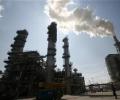
IIP-based cumulative industrial output growth during April-December 2010 was 8.6 per cent, on a par with the growth rate of the corresponding months of the previous year, says the Economic Survey 2010-11 which was presented by the Union Finance Minister Pranab Mukherjee in the Parliament on Friday.

Categories such as washing machines, refrigerators and television sets have seen sales growth of around 8-10 per cent in August compared to last year, industry sources said, with September also reporting a similar growth trajectory.

Much of the Q3 data will simply not be available for the CSO to factor in its calculation.

India's GDP is estimated to contract by a record 7.7 per cent during 2020-21 as the COVID-19 pandemic severely hit the key manufacturing and services segments, as per government projections released on Thursday. Amid overall decline in economic activities, some respite was provided by the agriculture sector and utility services like power and gas supply, which have been projected to post positive growth during the current fiscal ending March 2021.

'Both IIP and CPI inflation numbers are showing a huge disconnect from the leading indicators.'

Changes the base year and included more sectors.
The Index of Industrial Production recorded an impressive growth of 11 per cent in February despite power sector registering dismal performance indicating unpleasant summers in the days ahead.

Industrial production in May slowed to 2.7 per cent from 5.6 per cent a year ago, dragged down by manufacturing, strengthening the case for an RBI rate cut.

Leading indicators suggest economic activity has been disrupted after demonetisation.

Industrial growth zoomed to 16.8 per cent in December 2009, giving hope to the government that overall economic growth may be faster and rekindling a debate on withdrawal of stimulus packages in the Union Budget.
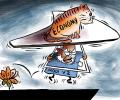
What could be the reason for the successive downward revisions across the board? Some key indicators make it evident, reports Abhishek Waghmare.
Eight infrastructure industries have posted a growth rate of 8 per cent for September on account of good performance by crude oil, steel and electricity sectors.

'Let's not get carried away by stocks like D-Mart, Jubilant Foods and all those companies that are trading at an expensive valuations.'

A rate cut could stimulate demand and help revive industrial activity, without much risk of sparking off inflation again.

Among Sensex constituents, Vedanta fell 3.40 per cent, followed by SBI 3.17 per cent, Yes Bank 3.11 per cent, Axis Bank 1.68 per cent, ONGC 1.60 per cent, Power Grid 1.52 per cent and HDFC 1.48 per cent.
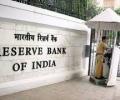
RBI is likely to have reached broadly similar conclusions since it did cut rates, presumably to stimulate activity.

Election results on Friday will determine the strength of the ruling coalition party Congress which will also determine market direction.

Lack of new investments may undermine higher consumption
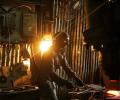
Manufacturing sector, which constitutes over 77 per cent of the index, showed a decline of 0.4 per cent in June as compared to a growth of 7.5 per cent in the same month last year.
Softening inflation, Das said would make available more policy space to the central bank to address risks to the growth going forward.

IndusInd Bank, Bharti Airtel, HUL, M&M, Tata Steel, PowerGrid and Tech Mahindra too ended with gains on the BSE.

The industrial production figures suggest the economy will grow by 7.5 per cent this fiscal and perhaps over 8.5 per cent in the next fiscal, Mukherjee told reporters in New Delhi.

'This has become a necessity now to kick start the investment cycle'

Trifacta's investors include Accel, Greylock Partners, Ignition and Cathay Innovation
'Formation of the Cabinet Committee on Investment is very positive news.'

The chambers said that the situation calls for urgent policy measures both by RBI and the government to salvage industry from further decline in industrial output.

"Within the broader index of industrial production, manufacturing has the largest of the weight. Having fallen off the cliff by 40.7 per cent during the April-June quarter, it is likely to witness a rebound when July IIP data is released. However, turnaround to positive growth trajectory could be some time away," Assocham said.
Six core infrastructure industries grew at 4.5 per cent in February against a meagre 1.9 per cent during the corresponding month last year, primarily due to increased output in electricity (7.3 per cent). The core sector had grown by a robust 9.5 per cent in January 2010.
Analysts polled by Reuters had expected output to grow 0.7 per cent annually.
